William Dyer
The Colour Out of SpaceWilliam Dyer is a geology professor at Miskatonic University whose expertise and composure make him a consequential member of the 1935 Australian expedition. Formerly leader of the university’s 1930–31 Antarctic expedition, he joins Nathaniel Wingate Peaslee’s party to investigate ruins whose apparent age challenges familiar accounts of the world’s past.
Identity and Professional Role
Dyer is identified as a professor in the college’s geology department and as the leader of the Miskatonic Antarctic Expedition of 1930–31. In 1935 he accompanies Peaslee to Western Australia alongside scholars from ancient history and anthropology and Peaslee’s son, Wingate. His background places geological expertise within an undertaking that is also archaeological and psychological: the party is searching for physical remains connected to accounts that have haunted Peaslee for years.
The Expedition and the Ruins
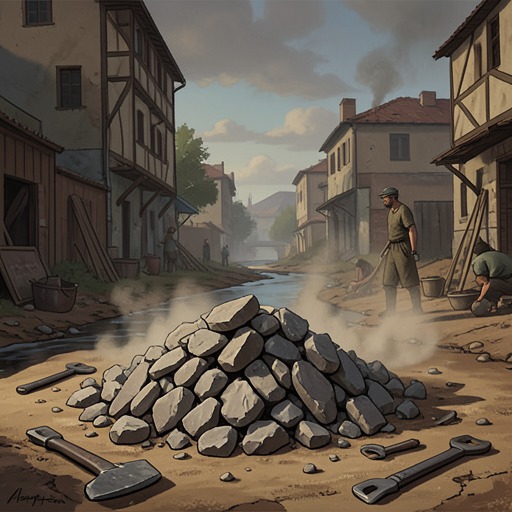
The expedition travels from Boston to Western Australia and then inland toward the reported ruins. On June 3, the party encounters half-buried blocks of masonry. Peaslee recognizes their carved pattern from his dreams, while Dyer’s response is professional but striking: he is appalled by the fragments’ immense age. During a month of excavation, the party uncovers about 1,250 blocks, including carved megaliths and pieces suggestive of floors, arches, and vaulting. Their scattered condition and extreme antiquity make the ruins more than an archaeological curiosity; they suggest a history extending beyond ordinary human timescales.
Dyer’s reaction registers the pressure these finds place on scientific expectation. The evidence is material, not merely a recollection or legend, yet its age and disordered remains resist an easy historical account. The narrative does not give him a separate theory of the ruins, but his alarm marks the point at which the expedition’s geological observations acquire unsettling implications.
Response to Peaslee
After Peaslee disappears from camp during a night of violent wind, he returns shortly after five in the morning, exhausted and in disarray. Dyer is awake outside his tent, smoking a pipe. He calls Dr Boyle, and the two help Peaslee onto his cot and make him comfortable; when Peaslee’s son is roused, Dyer and the others try to persuade Peaslee to rest.
Peaslee offers an explanation involving a nap, frightening dreams, and panic, while concealing anything stranger that may have happened. Dyer’s immediate response is care rather than interrogation: the account shows him attending to Peaslee’s condition, not claiming to know what occurred during the absence. His practical actions place him among the expedition members who receive Peaslee after the night’s unexplained events, while the truth of those events remains withheld from them.
Narrative Significance
Dyer’s part is concise but distinct. His prior expedition leadership establishes his standing within the university, his geological judgment gives the ruins’ age professional weight, and his assistance after Peaslee’s return anchors a moment of private crisis in ordinary camp routine. The contrast matters: the party can measure, excavate, and care for one another, yet those familiar practices do not resolve the deep-time history or Peaslee’s concealed experience. Dyer remains a colleague and witness to the consequences, not an interpreter of the secret itself.